
Stability and load-bearing condition
We assess whether the existing layers form a stable base for a thin finish.
Microcement / floors
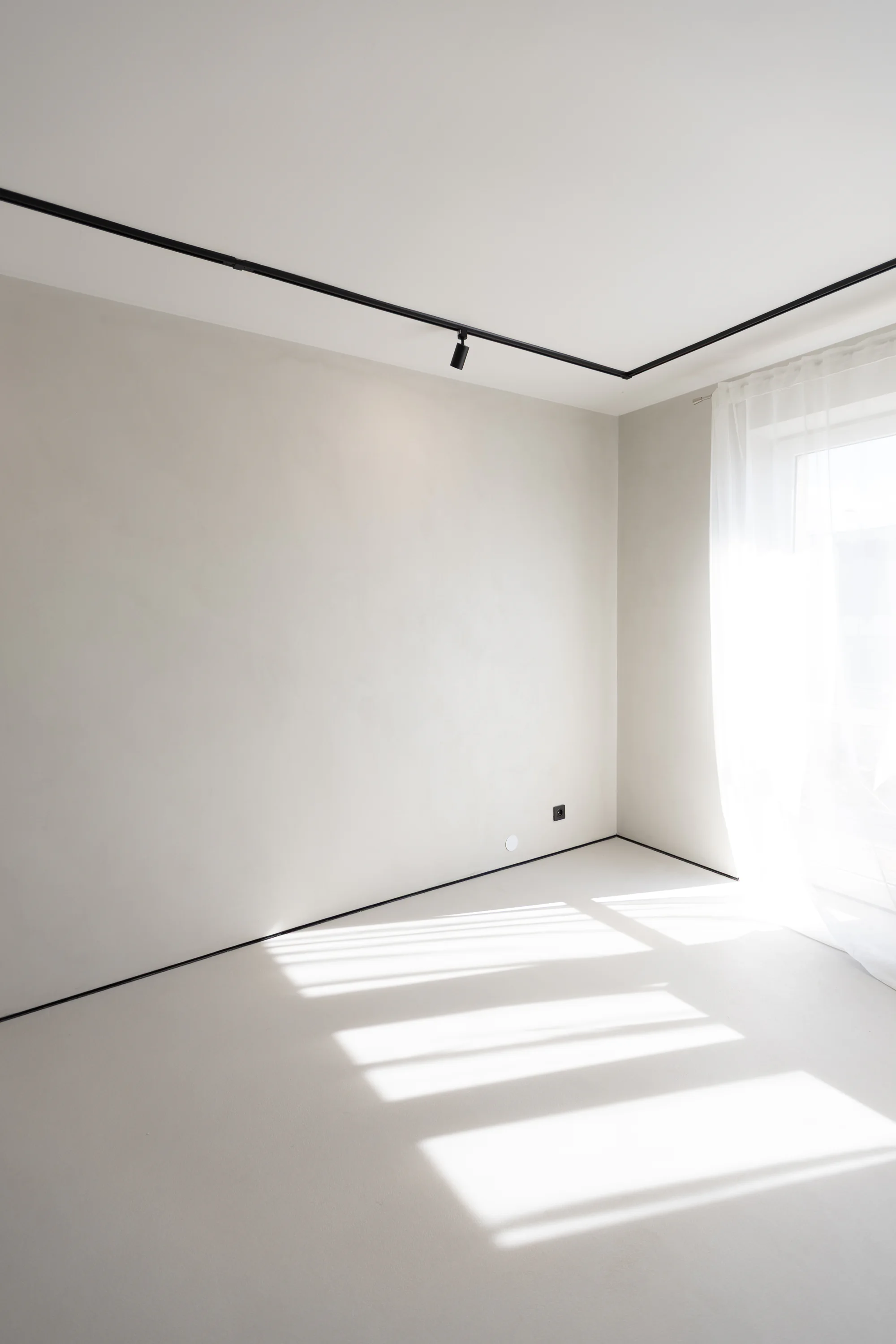
Microcement can create a calm, continuous base for an interior. Before choosing the effect, we assess stability, geometry, visible cracks, movement joints and intended use.
Send floor photosFloor scale
A large plane will not hide movement in the substrate. It will reveal it.
We confirm the scope for the specific project.
Before we confirm the scope
Photos are enough to begin. If they do not show the condition of the surface, we will explain what further verification is needed.
We assess whether the existing layers form a stable base for a thin finish.
Visible cracks, movement joints and transitions between materials need to be understood before a quote is prepared.
Flatness, levels, thresholds and planned skirtings affect the preparation scope.
Site conditions, expected traffic and future care influence the proposed solution.
The floor in daily use
A floor is seen across the whole room but used underfoot every day. We therefore discuss both the visual effect and the conditions of future use.
We need information about the floor build-up and the stage at which the heating was commissioned. Its presence alone is not enough to confirm the solution.
We do not hide existing movement points without agreeing how they will be treated. The junction with timber, stone or another floor is part of the detail design.
Like any floor in use, microcement can develop signs of wear. Cleaning, furniture protection and correct care all matter.

Project-specific quote
Area alone does not show the condition of the substrate, the number of details or the organisation required on site.
See how we prepare a quoteMaterial in motion
On a floor, each movement becomes part of one surface. The footage shows a real VPD application stage.
See the full processHow the collaboration works
The floor organises the whole interior, so decisions about the substrate and transitions come before application.
See the full processYou send photos, approximate area, location, substrate information and preferred timing.
We review visible risks and decide whether further information or a site visit is needed.
We complete the system stages and check the agreed critical details.
We complete the agreed work and provide information on correct use and care.
No shortcuts
It can be considered over underfloor heating, but we need information about the substrate, the installation and its commissioning stage. We confirm the solution for the specific floor build-up.
Microcement is a thin finish and can reflect movement in the substrate. This is why we assess cracks, movement joints and material transitions before work begins.
A floor in use can develop signs of wear. The risk depends on traffic, furniture protection, cleanliness and care.
It is not a repeatable print. Hand application creates natural tonal movement whose appearance changes with scale and light.
Send photographs of the whole floor, close views of cracks and joints, approximate area, substrate information, location and preferred timing.
Before a floor quote
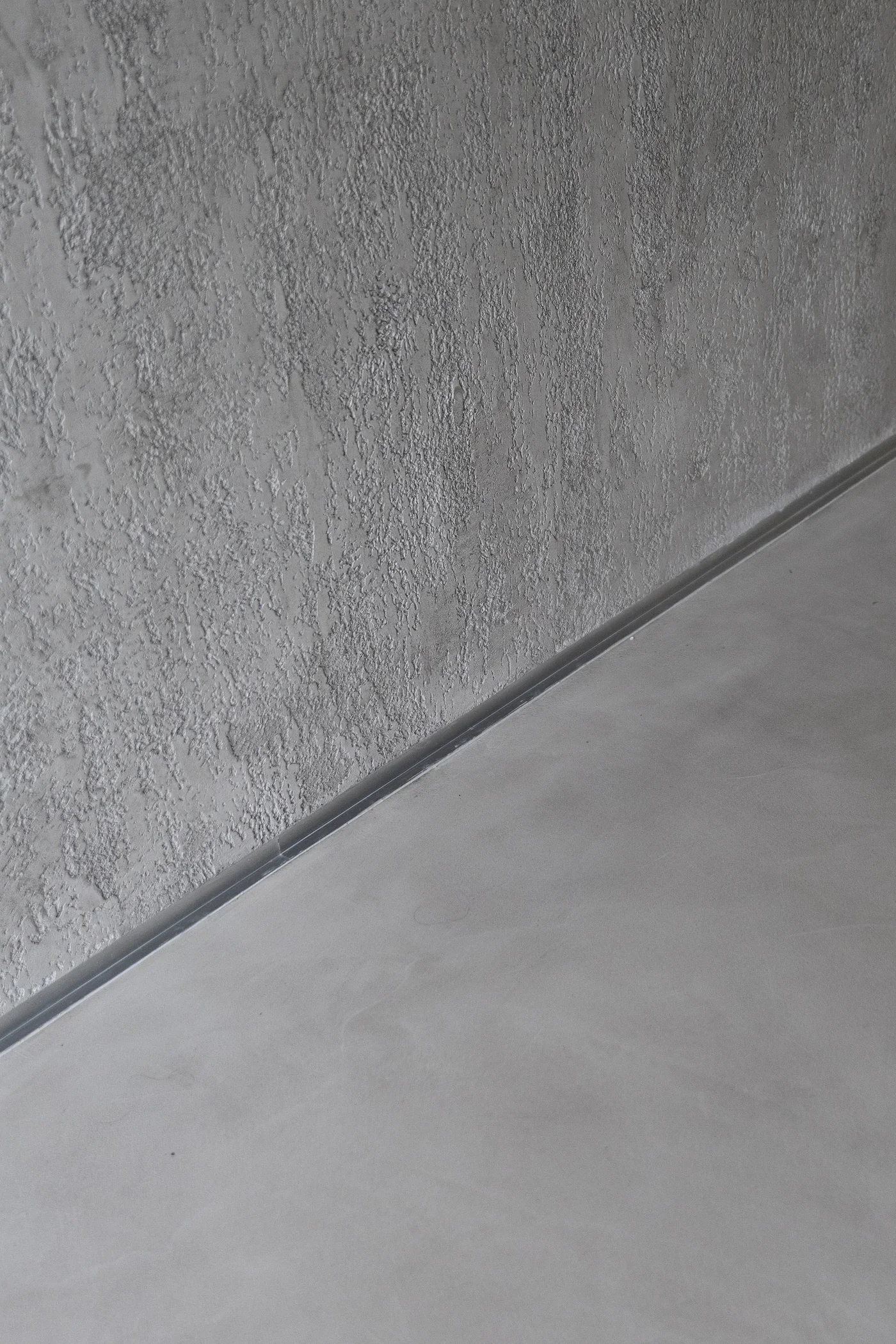
A texture photograph helps choose an appearance. Cracks, movement joints, thresholds and transitions matter more when defining the work.
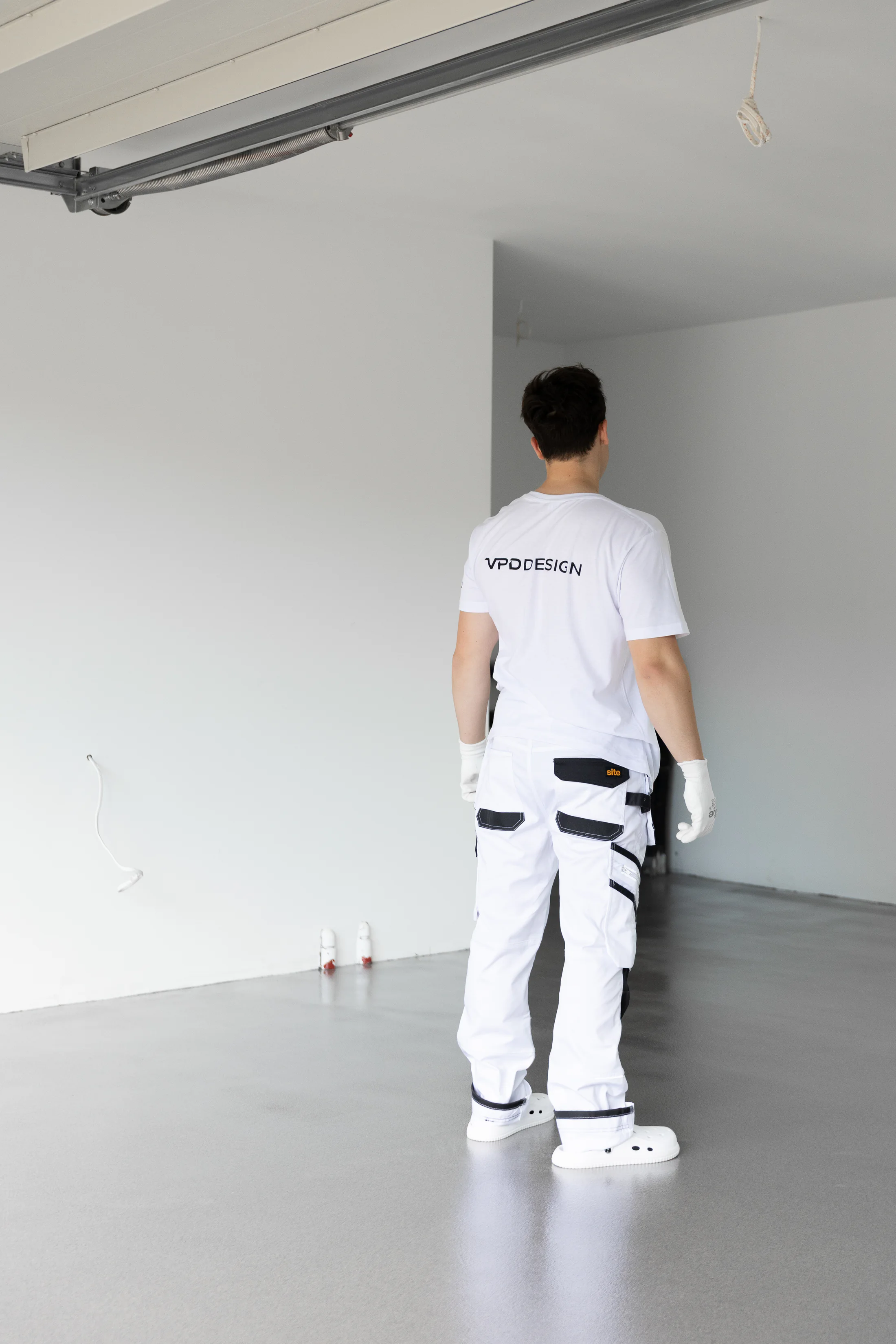
See the process near Warsaw The photographs show hand application and surface scale, not the substrate or a finished interior.
What affects floor cost?Initial assessment
From photos and a short description, we will check whether we have enough to prepare a quote or need more information.
Enough to get started