
At a glance
Separate dry walls, floors and surfaces regularly exposed to water.
Compare complete bathroom solutions rather than visible finish prices alone.
Check the base, drain, waterproofing and junctions before deciding.
Decide what kind of surface you want to see
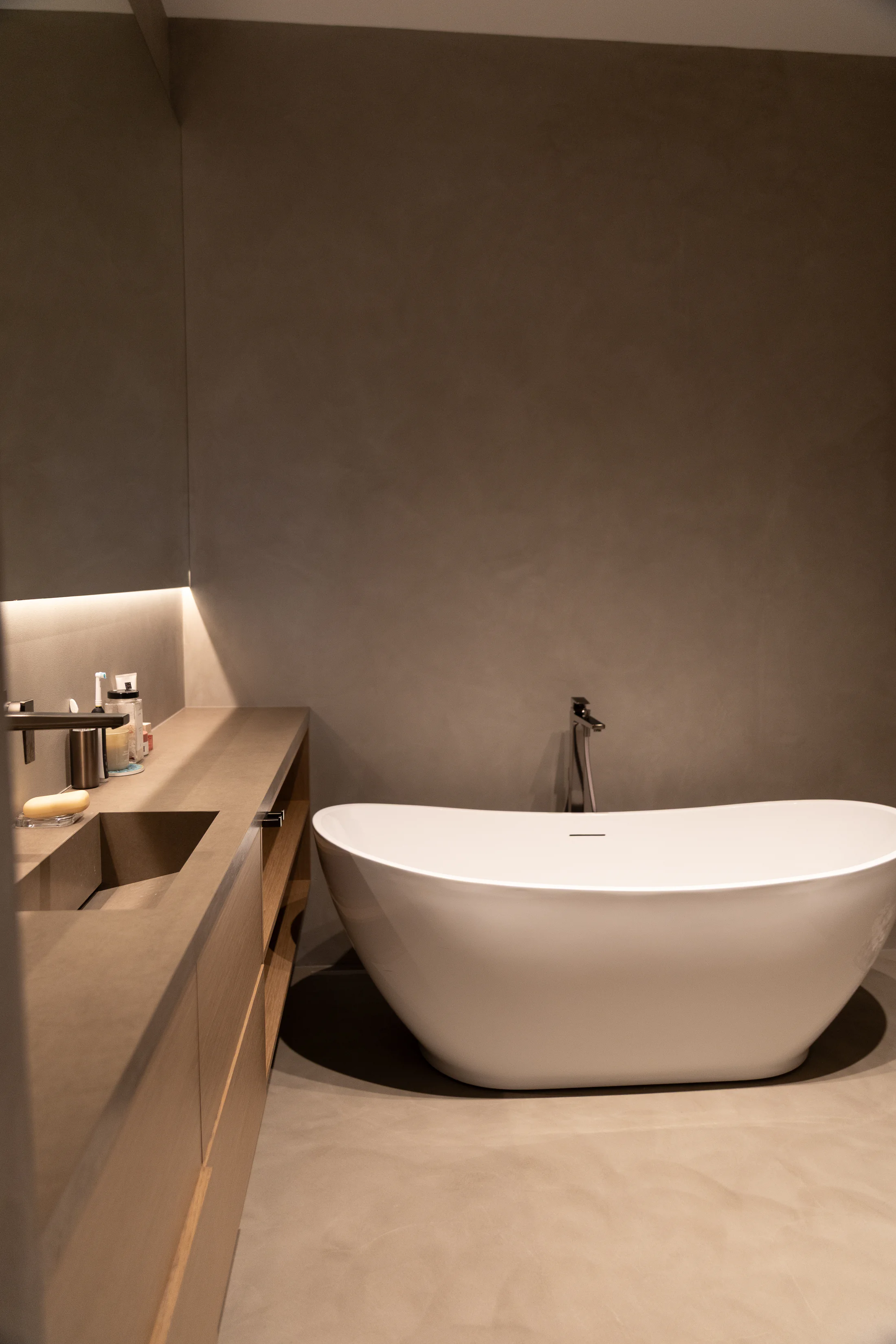
Microcement can create a large, visually continuous area with a hand-worked texture. Tiles offer a modular pattern, many formats and a visible grid of joints. Either can suit a small room: lighting, colour, tile size and the way a finish meets adjoining surfaces all affect the result.
View physical samples in the light of your bathroom. A phone image is a poor guide to texture and shade. Compare a tile with its proposed grout; for microcement, discuss the intended texture and where the surface will end.
Do not treat the whole bathroom as one zone
A dry wall, the floor by a basin and the inside of a shower face different exposure to water. In a shower, waterproofing, falls, drains, corners and pipe penetrations must be resolved. Neither tiles nor a decorative microcement layer removes the need to design those details. The protective system selected for microcement must suit the intended use and the manufacturer’s instructions.
Ask for a description of the complete solution for each zone, including who is responsible for the layers below the finish. That is more useful than a general claim that a material “works in bathrooms”.
A comparison to take to your contractor
Use the criteria that matter in your room. The table does not replace an assessment of the existing structure.
| Question | Microcement | Tiles |
|---|---|---|
| Appearance | Visually continuous plane and hand-worked texture | Separate pieces, formats and grout lines |
| Repairing one area | Match and visibility of a local repair need assessing | One piece may be changed if a matching spare is available |
| Existing base | Check stability and system compatibility | Appropriate preparation is still needed |
| Shower | Complete wet-area build-up required | Complete wet-area build-up required |
Consider care and future repairs
For either finish, ask for the care instructions for the product actually proposed and what to do after damage. Microcement offers visual continuity, but a local repair may be visible if colour and hand-worked texture cannot be matched. A single tile can be replaced only if a compatible spare is available; grout affects the appearance as well.
Avoid choosing by a vague claim that a finish is “easy to maintain”. Discuss the household’s cleaning products and expected use with the contractor.
Make the decision for your bathroom
Mark dry and wet surfaces on a plan. Photograph the drain, thresholds and existing finish. Request comparable proposals that include preparation and the layers each zone needs. If an old bathroom has unknown waterproofing, have the concealed work assessed before committing to a decorative choice.
VPD Design
Considering microcement in a bathroom?
Send room photographs and mark the wet zones. That starts a discussion about the full scope, not just the colour.
Describe your bathroom